SPORT COGNITIVE NEUROSCIENCE · KAOHSIUNG, TAIWAN

TISS

TAIWAN INSTITUTE OF SPORTS SCIENCE國家運動科學中心

The brain
before the movement.

We study how attention, physiology, and neural readiness converge before skilled action—and whether that preparation can be trained and brought back to sport.

Dr. Ming-Yang Cheng · Associate Research Fellow, Taiwan Institute of Sports Science · Founder, SPIN Lab

RESEARCH DOSSIER · FIG. 01
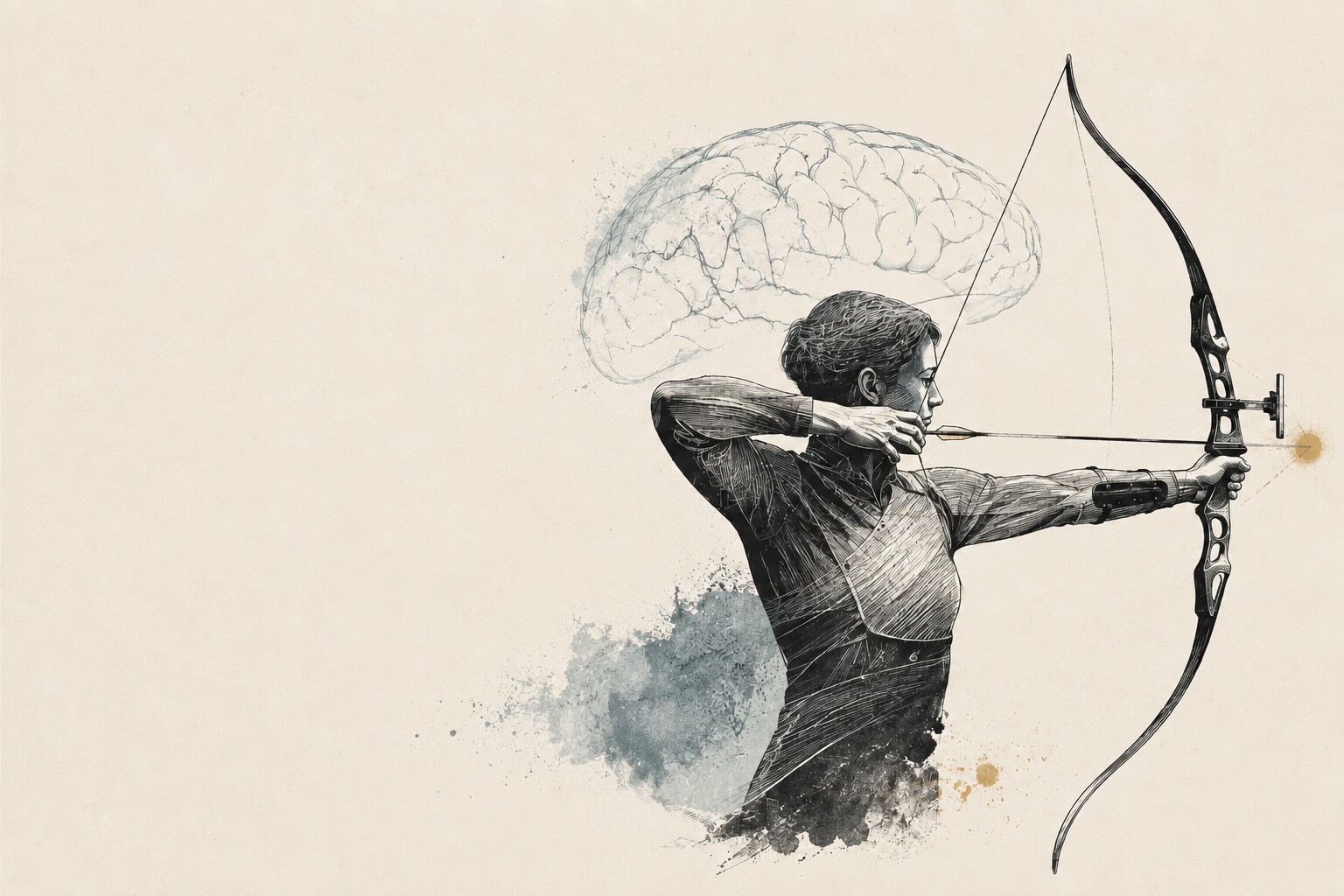
An archer preparing to shoot as cortical nodes organise in the background before action
Pre-action windowA schematic timeline showing how attention, physiology, neural readiness and motor preparation converge before skilled action. Neural readiness is marked as the layer targeted by EEG neurofeedback.−2.0 s0.0 sATTENTIONPHYSIOLOGYNEURAL READINESSMOTOR PREPARATIONACTIONWhere neurofeedback intervenesNot directly observable; measurable and trainable
FIG. 01 · PRE-ACTION WINDOWAttention, physiology, neural readiness and motor preparation converge before visible action.Schematic; neural readiness is marked as the layer targeted by EEG neurofeedback. Not measured onset times or a universal preparation sequence. Not directly observable; measurable and trainable
WHO I AMSport neuroscience researcherAssociate Research Fellow · TISS
WHAT I STUDYThe state before actionAttention · physiology · neural readiness
WHAT I BUILDSPIN Lab methodsMeasure · train · test transfer
WHAT IT PRODUCESEvidence for decisionsPublications · athletes · public knowledge
Preparation under pressureThe same posture beside schematic signals in two contexts. Differences must be tested alongside sporting performance.FAMILIAR CONTEXTEEGBEFORE ACTIONPRESSURE CONTEXTEEGBEFORE ACTION
FIG. 03 · PRESSURE AND PREPARATION

The movement may look the same while preparation differs.

Schematic, not measured signals. No universal ideal state or training outcome is specified.

01 · THE CORE QUESTION

Performance begins before movement becomes visible.

The action may last a moment. The preparation behind it is a connected process that can be observed, tested, and—under the right conditions—trained.

02

THE WORK

Understand. Train. Translate.

Identify the neural and physiological state before skilled action.

Explore the mechanism

Turn research-supported EEG and HRV markers into individual feedback.

See the training method

Test whether the response remains useful for athletes and coaches.

See field application
03

SELECTED EVIDENCE

Enter through the question. Inspect the evidence when needed.

EEG, autonomic regulation and sporting outcomeThree schematic rows keep neural, physiological and performance observations together, without assigning a fixed causal sequence.CORTICAL RHYTHM · EEGAUTONOMIC REGULATION · HRVSPORTING OUTCOME
FIG. 02 · BRAIN—BODY—PERFORMANCE

Signals and outcomes need not change together; interpret them within the same sporting task.

Schematic, not measured data. No fixed sequence or training effect is implied.
KEY FINDING

Performance quality is associated with measurable differences in pre-action cortical organisation.

Psychology of Sport and Exercise · 2023 · EEG · PRE-ACTION WINDOWInspect this evidence
KEY FINDING

Attention and physiological regulation may shift before technique appears to change.

Scandinavian Journal of Medicine & Science in Sports · 2026 · EEG × HRVInspect this evidence
KEY FINDING

Across studies, transfer without feedback remains inconsistently demonstrated.

FRONTIERS IN PSYCHOLOGY · 2024 · NEUROFEEDBACKInspect this evidence
Explore the signature work

04 · SPIN LAB

SPIN Lab

Research becomes practice here.

SPIN Lab makes preparation visible, trains a research-informed response, and tests whether the skill transfers to the athlete's own performance setting.

Enter SPIN Lab
SPIN Lab — Sport Performance Integration with Neuroscience
  1. 01Measure
  2. 02Train
  3. 03Transfer
05

FIELD APPLICATION

The laboratory is not the destination.

A finding matters when it can improve the next decision without losing the context and limits that make the evidence trustworthy.

Research → Validation → Athlete → Decision → Transfer

Explore field impact
06

CURRENT SIGNALS

A concise view of what is moving now.

The study connects motivational stress with coordinated neurocognitive, autonomic, and performance changes before action.

Open the publication

Current NSTC and TISS programmes test how EEG–HRV readiness can inform individualised neurofeedback and transfer in precision sport.

View funded projects

Live EEG made the path from psychological state to measurable signal and neurofeedback regulation tangible for practitioners.

Read the event record
View all current signals
07

SCIENCE OUTSIDE THE LAB

Brainfield by Dr. Cheng

Brainfield

Articles, podcasts, talks, and public conversations make neuroscience understandable while keeping the evidence intact.

RESEARCH · APPLICATION · CONVERSATION

Begin with a question.

Share the context and the question; then we can define the next step.
Contact Dr. Cheng