Kurash | Neurofeedback and state regulation
Practise regulating preparation, then check whether the state can be maintained after feedback is removed.
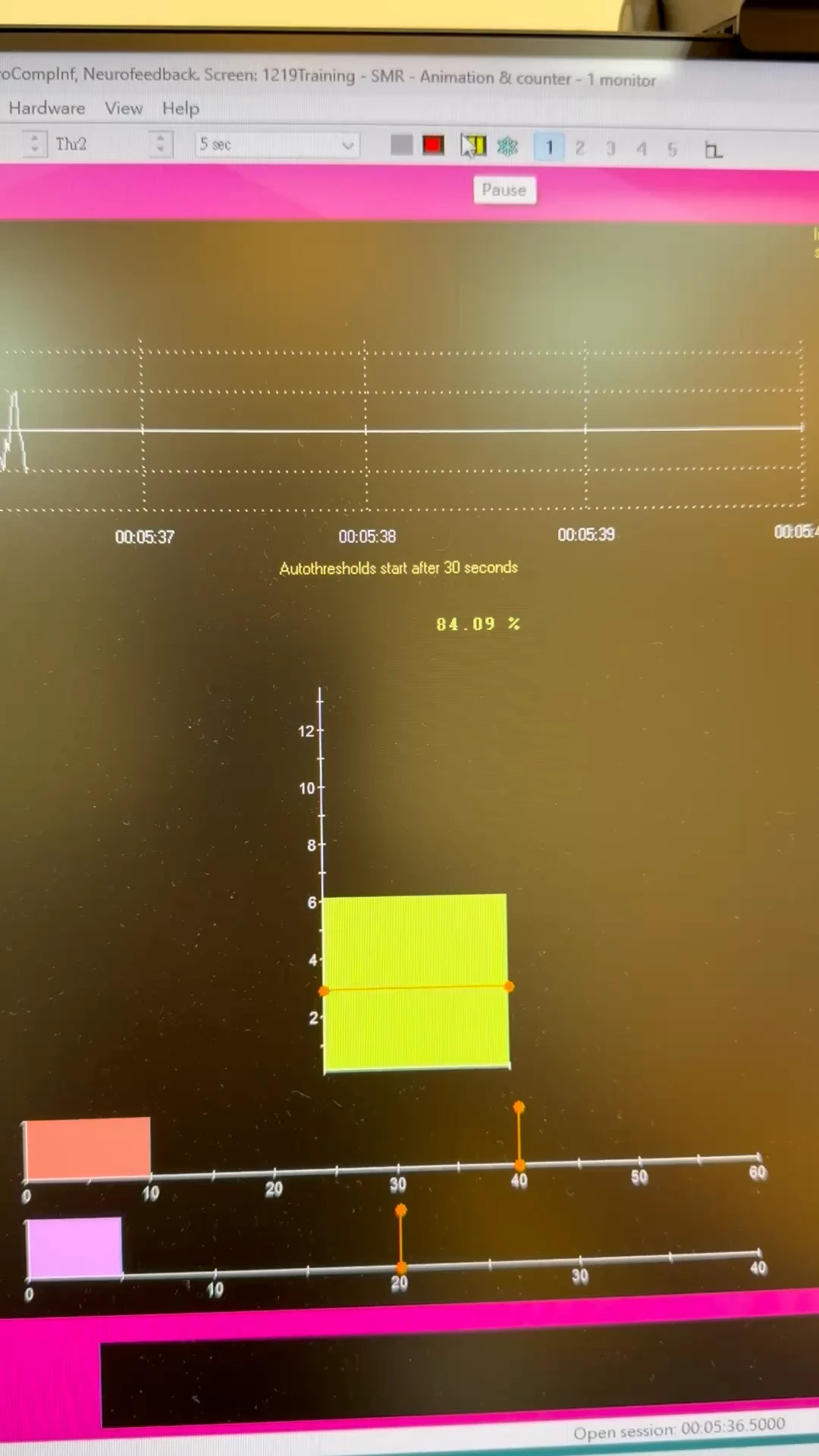
What to look for in this image
- Feedback signal: the display provides real-time feedback on the selected EEG marker.
- Practice: athletes try regulation strategies alongside self-report and coach observations.
- Test again: remove feedback and check whether the practised state can be maintained.
What preparation does this sport require?
Close-contact bouts follow the opponent’s rhythm, requiring shifts between composure and arousal.
How do we use EEG?
Use sensorimotor rhythm (SMR) as practice feedback alongside self-report and coach observation; a training-room marker is not competition performance.
How does support work?
Athletes try regulation strategies using visual feedback. Record subjective state before and after training, discuss it alongside coach observations, then remove feedback to check whether the practised state can still be entered and maintained.
An individual support record.
Images and support descriptions are drawn from the TASM symposium presentation on 18 October 2026.